A product is more than its function
Sustainability is part of the equation
Materials, construction and product information influence a product’s environmental impact throughout its entire life cycle. That is why issues such as eco-design, circularity and product transparency are becoming increasingly important. Our customers need dependable information to enable them to evaluate and compare products and make informed decisions.
Our goals for sustainable products
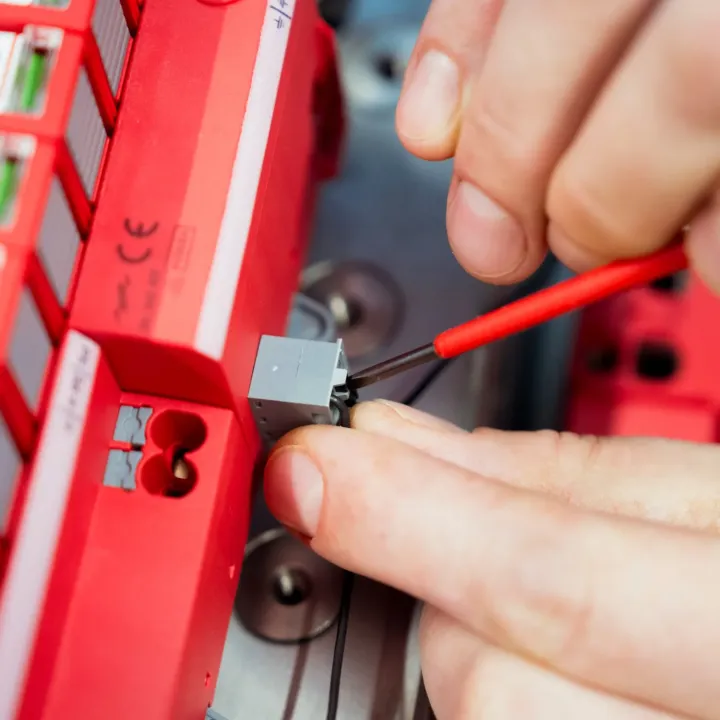
We have clear objectives regarding materials, recyclability, packaging and climate-friendly product solutions. Our aim is to conserve resources, strengthen circular economies and support our customers in making sustainable choices.
Our approach to sustainable products
Sustainable products are the result of a combination of innovation, quality, resource efficiency and transparency. That is why we consider the entire product life cycle, from development through to use, and on to reuse and recycling.
Materials influence environmental impacts
The choice of materials has an effect on resource consumption, emissions and a product’s subsequent recyclability. That is why we do not consider material choices in isolation, but rather across the entire product life cycle. Our aim is to use materials as efficiently as possible and to ensure they remain usable in the long term.
As part of this, we are constantly exploring the use of recycled, renewable and more easily recyclable materials. At the same time, we do not assess materials solely on the basis of environmental criteria, but also in terms of their function, quality and suitability for long-term use. This results in solutions that fulfil technical requirements whilst also contributing to the preservation of resources in value creation.
Environmental impact and design go hand in hand
Many decisions are made as early as the development stage – long before a product is manufactured, installed or used. Construction, choice of materials and technical requirements interfere with a product's longevity, maintainability and recyclability.
That is why, as part of our eco-design approach, we take into account aspects such as longevity, reparability, deinstallation and recycling at an early stage. In this way, we lay the fundamentals for products that conserve resources and can be used reliably throughout their entire life cycle.
Products become cycles
Responsibility does not end with the delivery of a product. Recycling management considers materials and raw materials throughout their entire life cycle.
Product compliance provides guidance
Product information and evidence of conformity support planning, procurement and evaluation.
That is why we provide product-specific information on relevant requirements and evidence. Using our product-specific search function, you can view the available REACH and RoHS certificates directly for each part number.
In addition, we are working on the provision of next-generation product-related environmental information. These include Environmental Product Declarations (EPDs), which are intended to provide additional transparency regarding the environmental impacts of selected products.
Check product compliance
The product-specific compliance enquiry provides you with evidence of REACH and RoHS compliance directly for the relevant product number.
Check REACH and RoHS compliance directly using the product number.
The information provided relates to the current version of the product. The product-specific evidence of conformity and technical documentation are decisive.
Thinking about innovation and sustainability together
How are products developed that take future requirements into account? In this interview, Dr Armin Lau, Director of Innovation Management at DEHN, explains why materials, product design and recycling management are increasingly becoming part of strategic innovation work.

Any questions about sustainable products? Contact us.
Head of Corporate Sustainability

Innovation Management

There is data behind every statement
We make evidence, certificates and further information freely available and ensure that our measures are transparent.
Certificate EN ISO 14001
Environmental management system
Certificate EN ISO 50001
Energy management system
Compliance with RoHS2 and REACH
Certificate of Participation in the Interzero Recycling Alliance Dual System
Recycling Certificate for Transport Packaging – Interzero Circular Solutions Germany
FAQs
Evidence of conformity with REACH and RoHS is available for many DEHN products. Using the product-specific conformity enquiry function, you can access the available certificates directly using the relevant product number.
The product carbon footprint provides a description of a product’s greenhouse gas emissions throughout its life cycle. It helps customers to better assess their environmental impact and to fulfil product-related sustainability requirements or reporting obligations.
In future, the Digital Product Passport will bring together product-related information in one central location. This may include, for example, technical data, materials, evidence of conformity or sustainability information. The aim is to ensure transparency throughout the entire product life cycle.