Surge protection with a backup fuse: where the protection gap arises
A backup fuse in surge protection is necessary. And that's where the problem arises. Why does the backup fuse in a surge protection system become a weak point? Because it must be dimensioned so that it does not trip in the event of surge currents, yet still disconnects quickly in the event of a fault. Internal SPD disconnectors can only interrupt very small currents, while a backup fuse can only cut off high currents.
This is exactly what creates the protection gap, with direct consequences for the safety and availability of your systems.
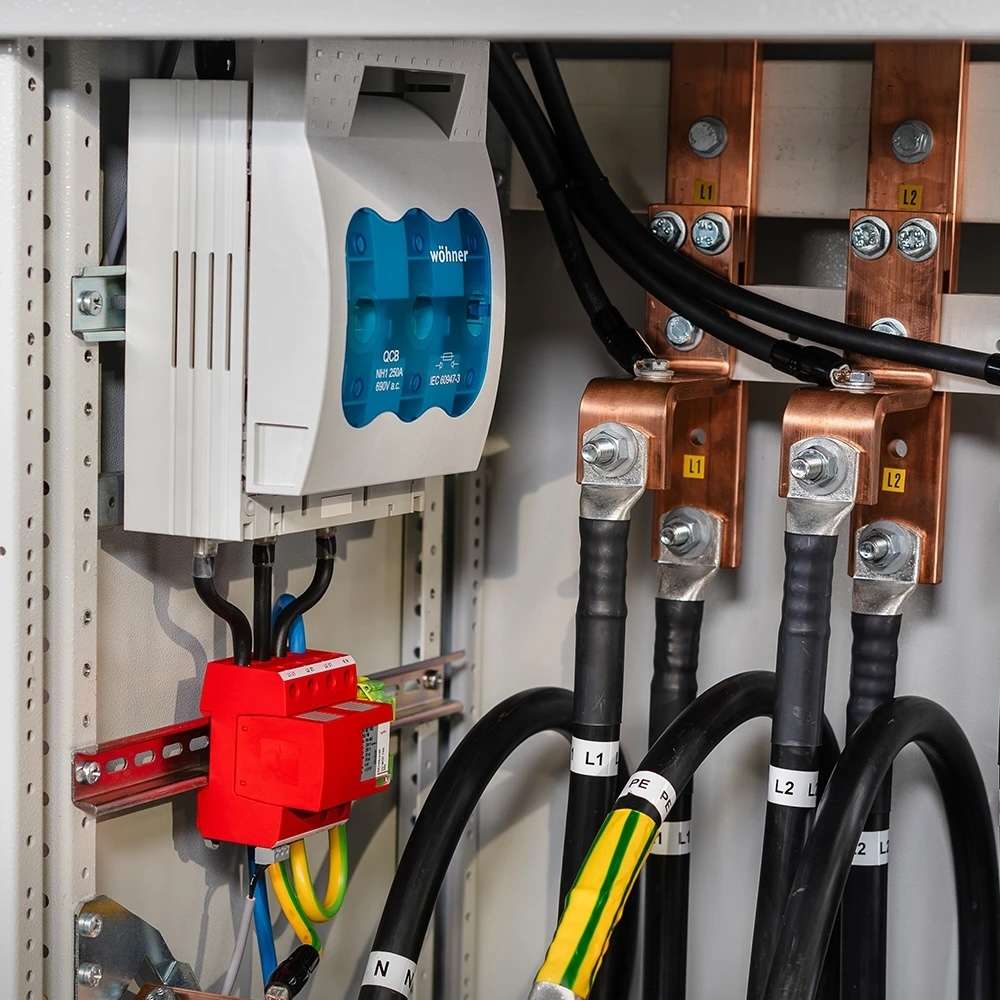
Why is a backup fuse necessary for SPDs?
A backup fuse is compulsory for SPDs. It performs key protective functions in surge protection:
SPDs may fail in a short-circuit manner in the event of extreme overvoltages. Without a backup fuse, there is a risk of overload, fire and damage to the distribution board.
The thermal disconnectors of SPDs are not designed to interrupt high short-circuit currents. The SPD cannot interrupt these currents itself.
The backup fuse ensures that the SPD combination can withstand the fault current and maintains the availability of the system.
Why does a conflict of objectives arise in surge protection?
The conflict of objectives in surge protection arises because the backup fuse is required to perform contradictory tasks: it must not interrupt surge currents, yet it must disconnect quickly in the event of a fault.
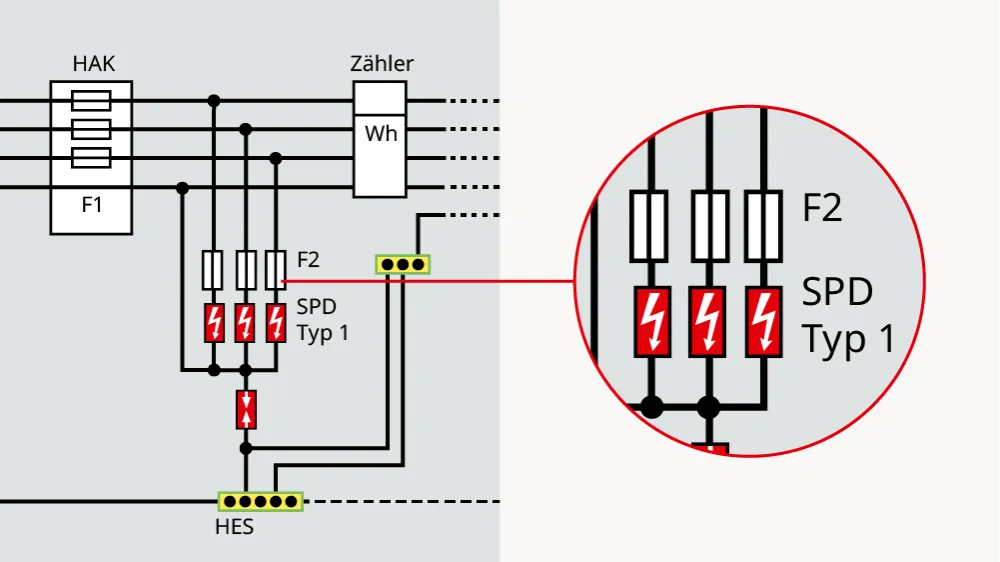
Dimensioning for surge currents
In order to withstand high surge currents without tripping, backup fuses must be generously dimensioned.
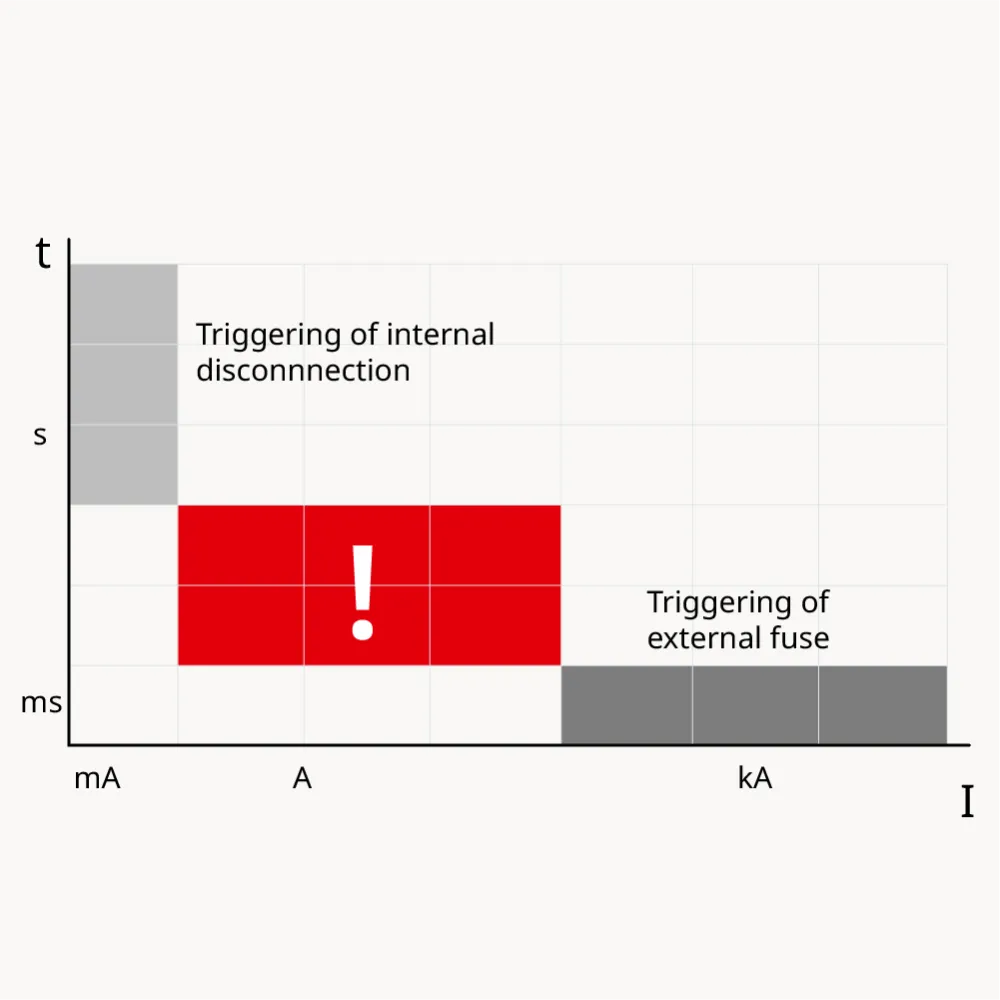
The protection gap emerges
In the event of a fault, the fuse often reacts too late, resulting in a protection gap.
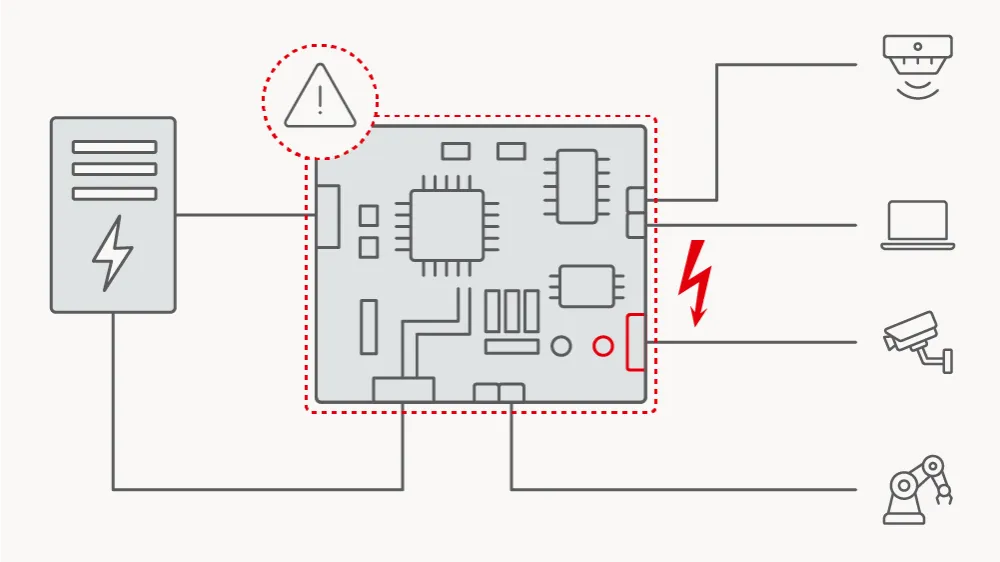
Risk for system availability
The protection gap could mean that the SPD poses a fire hazard, which in turn jeopardises operational safety and system availability.
The protection gap
With traditional concepts featuring an external backup fuse, a critical phase occurs. The SPD is already overloaded, but the excessively sized backup fuse does not yet trip. The result is that the SPD can be destroyed, putting the downstream system at risk.

ACI-1-Draft-Schutzlücke
Typical consequences in practice


Complex to plan and install
Why is selecting the correct backup fuse so complex? Because several factors must be taken into account at the same time:
- Compliance with strict normative specifications
The manufacturer's specifications for the maximum arrester backup fuse must be met. - Complex selectivity considerations
The selectivity for the network protection must be correct to ensure that the main protection does not trip. - Standard-compliant implementation
The OCPD design must meet the requirements of DIN VDE 0100-430. - Additional space requirements and material costs
External fuses require additional space in the distribution board and necessitate compliance with minimum cross-sections for connecting cables.
DEHN ACI: Surge protection with no conventional backup fuse
How does surge protection without a backup fuse work? DEHN's ACI (Advanced Circuit Interruption) technology integrates overcurrent protection into the SPD module, eliminating the conflicting objectives.
This transforms the entire protection concept:
- No external backup fuse necessary
- No additional voltage drops
- No complex selectivity coordination
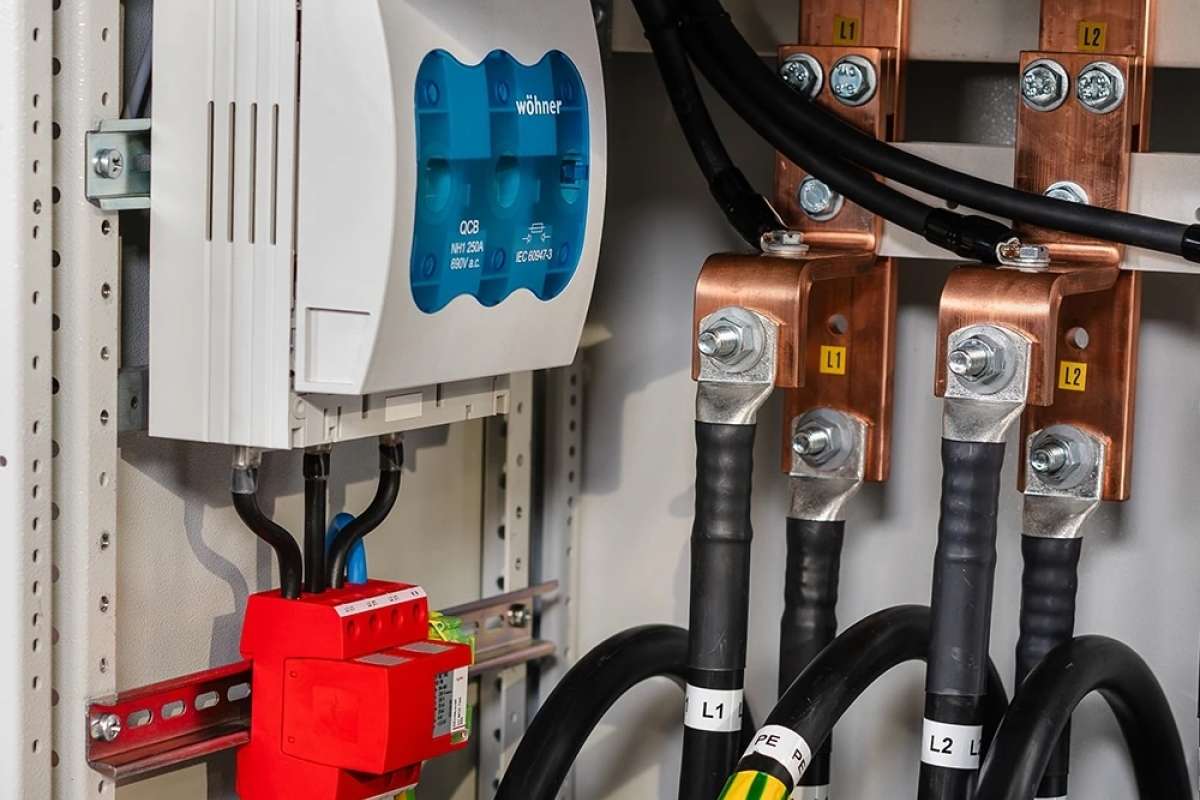
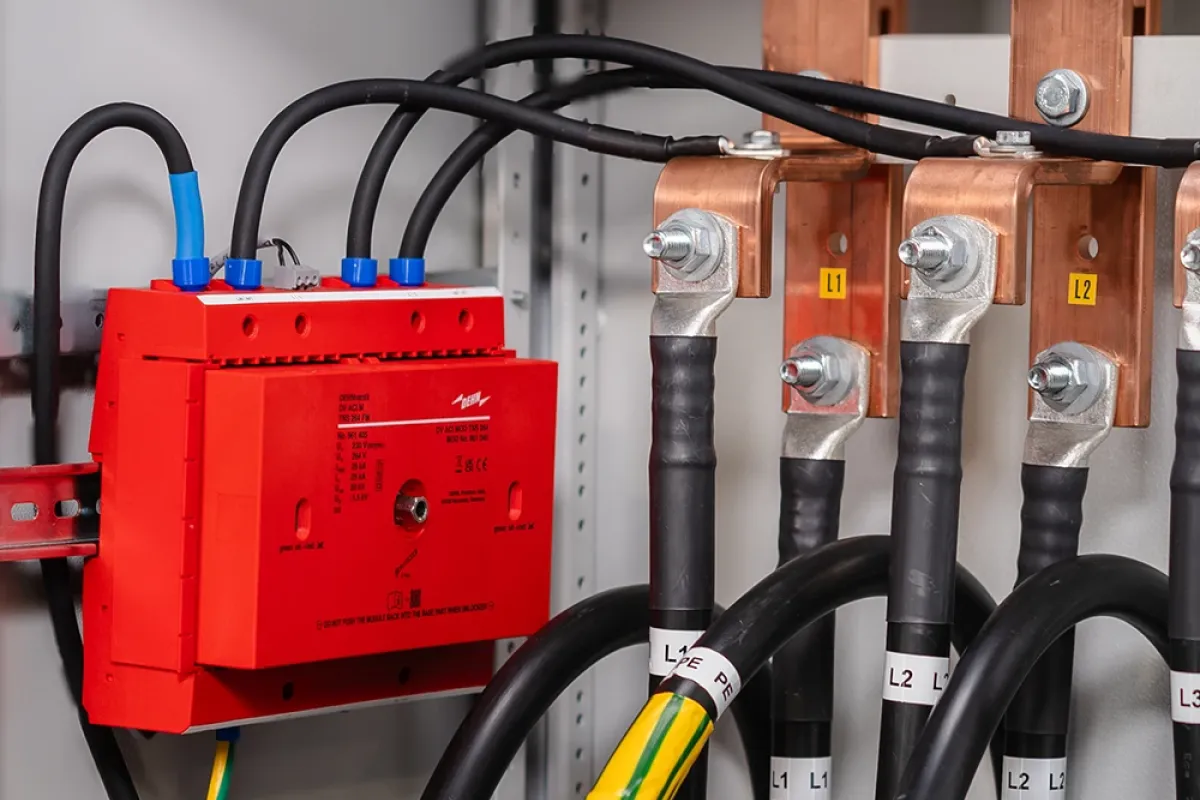

ACI Technology: Fast and Reliable Disconnection
DEHN's ACI technology responds immediately and with precision. The SPD is safely disconnected from the network before critical stress levels are reached.

ACI-1-Draft-Externe Vorsicherung Kennlinie

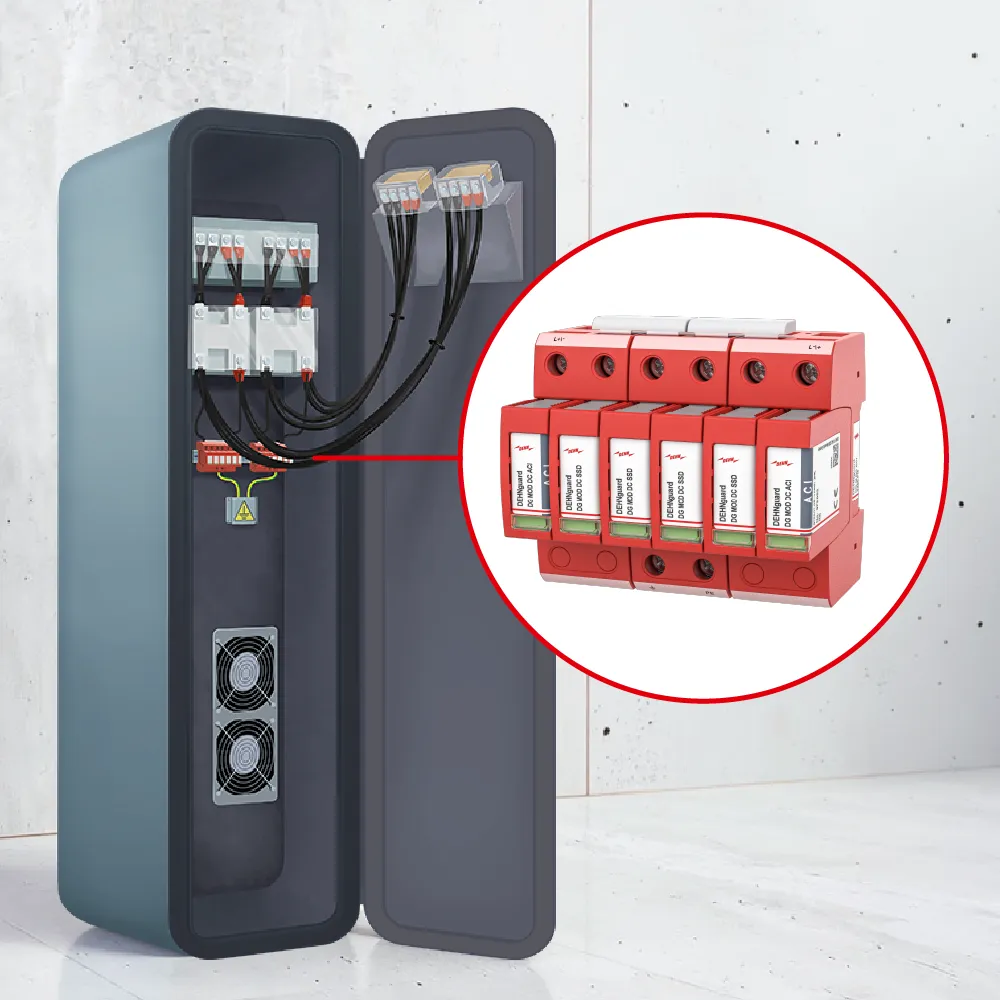
Technical background explained in detail
ACI technology has been developed to meet the specific challenges of surge protection and has the following features:
With ACI devices, an external backup fuse is not required, as a high-performance switching unit is integrated into the SPD itself. This is in contrast to many standard SPDs, which do require one.
With ACI technology, the protection level (Up) remains constant at below 1.5 kV. This is an advantage, as with external backup fuses, the effective protection level may increase due to the additional voltage drop at the fuse.
Under normal operating conditions, the ACI switching unit provides reliable insulation, preventing any leakage currents and avoiding premature ageing of the varistor. ACI devices also demonstrate genuine resilience to temporary overvoltages (TOVs) of up to 440 V and can withstand this voltage, whereas standard surge arresters are guaranteed to fail in these circumstances.
For many ACI devices, such as the DEHNguard ACI, a copper conductor cross-section of 6 mm² is always sufficient, which makes installation considerably easier. This is a key difference from standard arresters, which may require varying cross-sections depending on the type and installation.
In the event of an overload, ACI devices disconnect irreversibly and achieve a dielectric strength of over 4 kV – this ensures reliable isolation from the mains and is signalled via a remote signalling contact.
FAQs
Many questions regarding surge protection with a backup fuse only arise in practice. The following FAQs set out the key interrelationships and highlight where traditional protection concepts reach their limits.
- A backup fuse is required in a surge protection system to safely control short-circuit currents.
- If an SPD fails in the event of a fault and there is no suitable backup fuse, a high current may flow which causes damage to the distribution board or the entire system.
So a backup fuse is a technical requirement for the SPD – even though it introduces new challenges.
Choosing the right backup fuse depends on several factors:
- Short-circuit current at the point of installation
- Short-circuit withstand capability of the SPD (I_SCCR)
- Network structure and selectivity
- Manufacturers' instructions
There is no one-size-fits-all answer to the question as to which backup fuse is right for surge protection.
The selection must always be made on the basis of the specific system.
The backup fuse protects the SPD in the event of a fault. At the same time, the way it is designed can lead to a protection gap – which can result in fault currents that cannot be contained in time by either the backup fuse or the SPD's internal disconnectors.
The conflict of objectives refers to the difficulty of providing the optimum coordination of an SPD and the backup fuse.
This means:
- The backup fuse must not trip too early.
- At the same time, it must disconnect reliably in the event of a fault.
If it is oversized, a protection gap arises.
If it is under-rated, it can trip unnecessarily when the SPD operates.
This makes the design complex and prone to errors.
Selectivity means that the arrester backup fuse must be selective with respect to the main upstream fuse of the installation. This means that in the event of an SPD fault, the arrester backup fuse must trip, and not the main fuse.
Put simply: the fuse closest to the fault location should trip, not the main fuse.
Conventional fuses do not respond immediately.
They require:
- Time for the fuse wire or fusing element to melt
- Mechanical movement of the contacts
For smaller fault currents, that means the fuse may take a while to trip. During this period, a significant influx of energy may occur within the SPD. This can cause damage to the device or the system – even though a backup fuse is fitted.
Downloads
ACI-Technology
An innovative design concept for SPDs
ACI-Technology
Surge protection with no external backup fuse
ACI Technology
Hidden Dangers: How to protect your installations effectively